Religion 1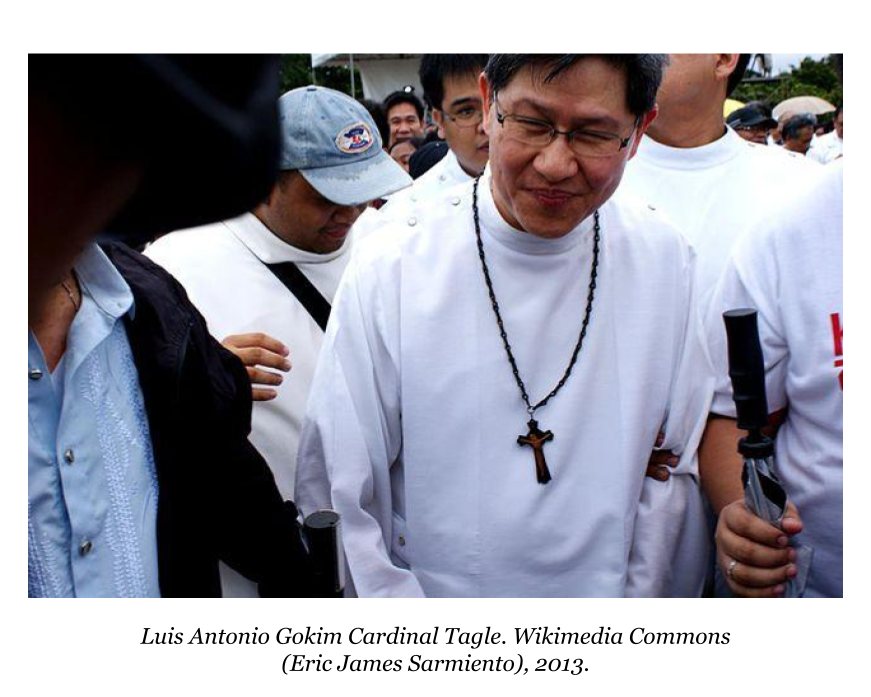
Religion is very important to many Filipinos, with Catholicism being the majority religion ever since the Spanish colonial period. But it
would be wrong to assume that all religious Filipinos are Catholic, or that Catholicism as practiced in the Philippines is simply a copy of Spanish Catholicism. In reality,
religion in the Philippines reflects the archipelago’s unique diversity, and religious Filipinos have added unique contributions to and emphases to the worldwide faiths of which
they are a part.
Filipino Catholics
80% of Filipinos are Roman Catholic, and the Catholic Church is very involved in the politics of the Republic. One high point of
this involvement is the People Power Revolution of 1986, which ended martial law and threw Ferdinand Marcos Sr. out of power. Two of the intellectual leaders of the
revolution were Archbishop Ricardo Vidal of Cebu and Archbishop Jaime Sin of Manila. On the other hand, the Catholic Church has
also opposed a number of things with broad public support: legal contraception, extrajudicial killings in Duterte's war on drugs, and the election of Ferdinand 'Bongbong' Marcos
Jr. in 2022.
The highest-ranking Filipino Catholic today is Luis 'Chito' Antonio Gokim Cardinal Tagle. The former Archbishop of Manila, Tagle was created a
cardinal bishop in 2020, meaning that he is one of the 12 highest-ranking men in Rome after the Pope. He is known as a progressive in the Catholic Church, supporting
lenience towards gay and divorced Catholics while opposing contraception and abortion. He is also still very active in the Philippines, and hosts the Catholic television
show Kape't Pandasal ('Coffee & Prayer') every Tuesday morning.
Filipino Catholicism
The Philippine Archipelago has made many of its own unique contributions to worldwide Catholicism. It was the home of the first Catholic
kingdoms in East Asia and was the 'launching pad' for many missionary projects in the region. Many of these missionaries were Filipinos themselves, and in the last few
decades two of them have been canonized as saints: there is St. Lorenzo Ruiz, a martyred in Nagasaki, Japan; and St. Pedro Calungsod, martyred while ministering to the Chamorro
people in Guam. There are also many famous icons in the Philippines, including the Black Nazarene, a wooden icon of Jesus that is said to cure the diseases of those who
touch it, and Amang Hinulid ('Father Laid to Rest'), another such miracle-working icon of Jesus that is said to have formed itself out of
driftwood.
Another unique element of Pinoy Catholicism is the Pasyón (or Pasyong Mahal 'Dear Passion'), an epic-style text retelling the life of Christ interwoven with moral lessons, with different versions in the
different languages of the Philippines. Associated with it is the tradition of pabasa, in which the entire text is recited over the course
of Holy Week. Lots of traditions surround this recitation: it is often done by shifts of readers so that it can be done from end-to-end, and the traditional style of the
recitation goes all the way back to pre-colonial group chanting traditions. On the other hand, pabasa can also be given a contemporary
twist, using more modern musical styles and even rap.
Watch this short video on Catholicism in the Philippines:


